
The Black Book – Robert Mapplethorpe (1986)
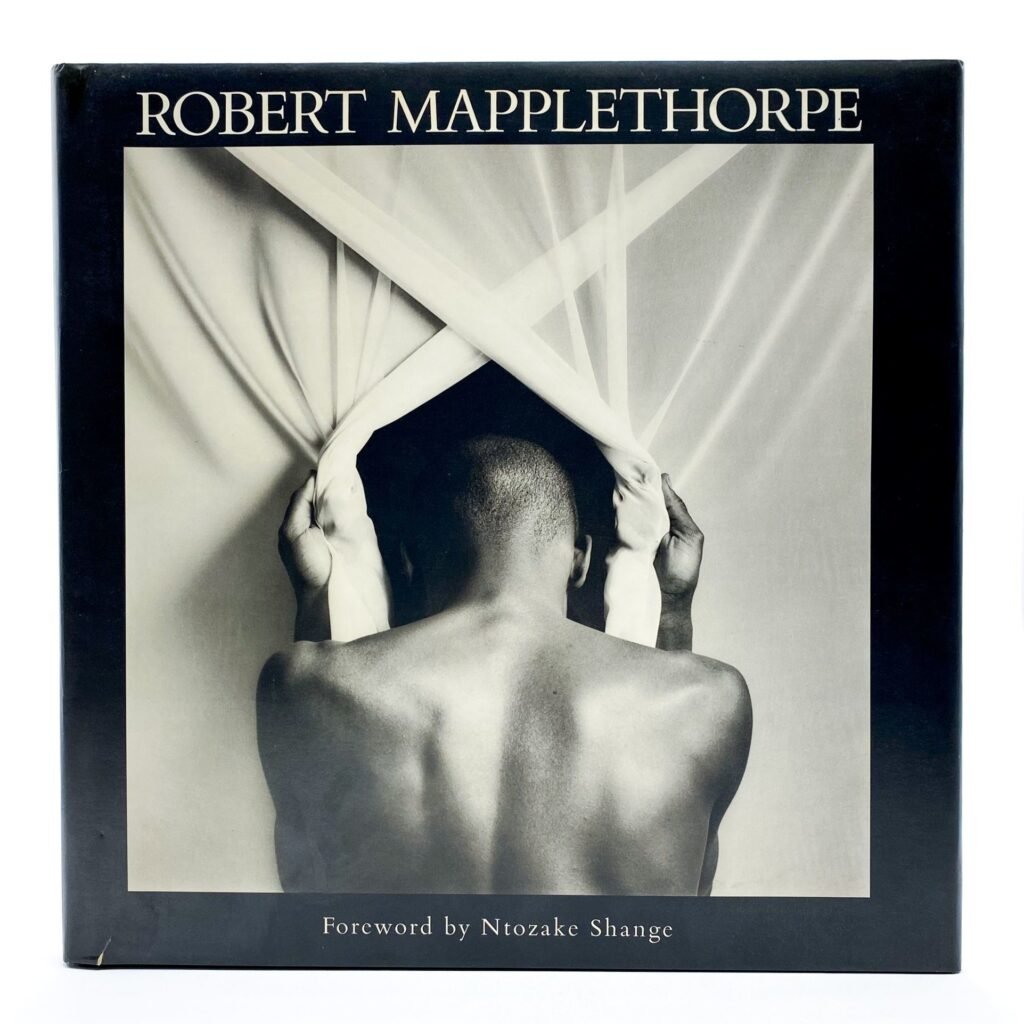
Archive entry: [ID_001]
The Black Book – Robert Mapplethorpe (1986)
I. Technical and material characteristics (Body)
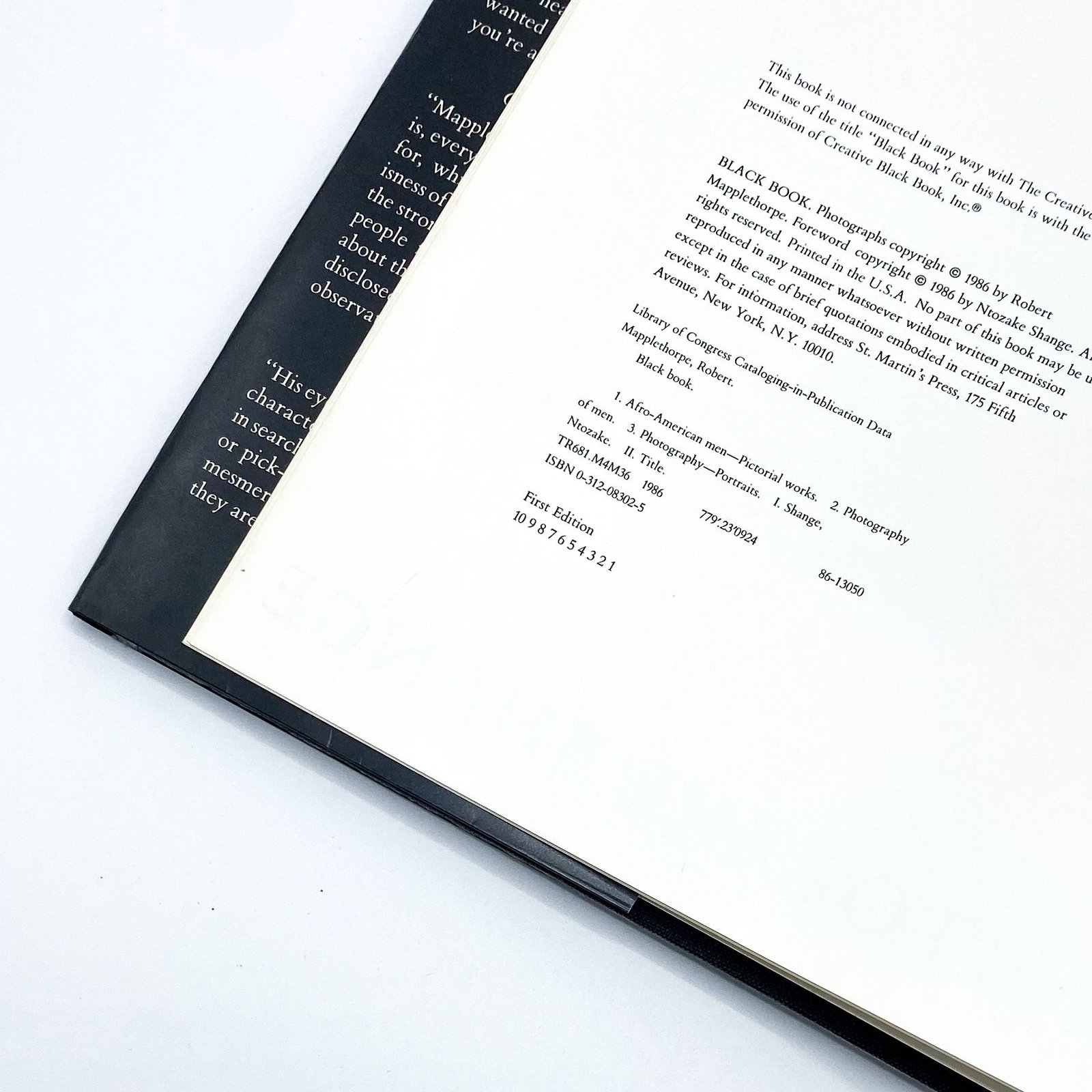
- Publisher/Year: St. Martin’s Press, New York, 1986.
- Format: Oversized Folio , 31 x 31 cm.
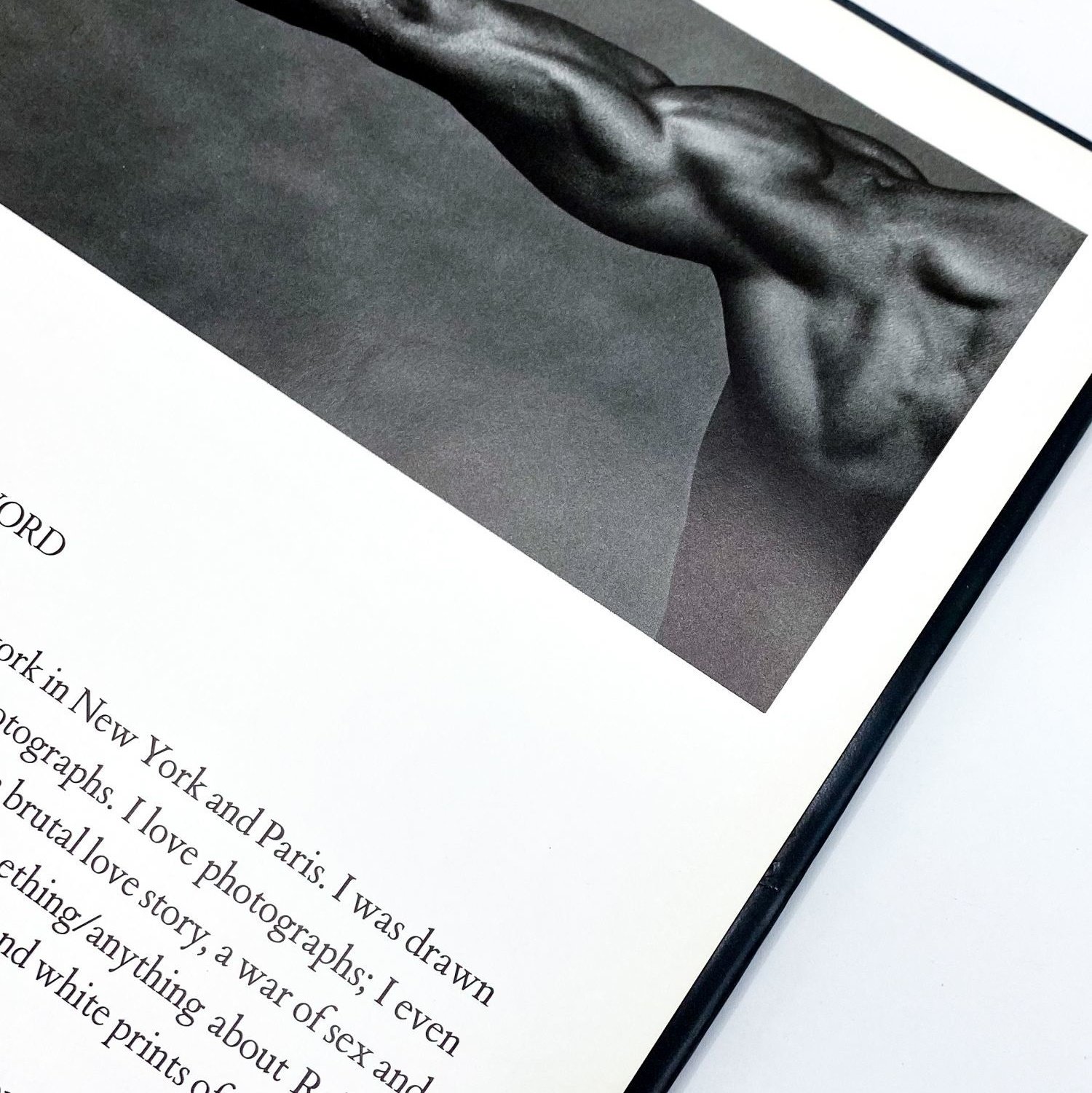
- Paper: Extra thick, matte, uncoated archival paper ( Heavyweight Matte ).
- Print: Deep, rich duotone print ( Duotone ).
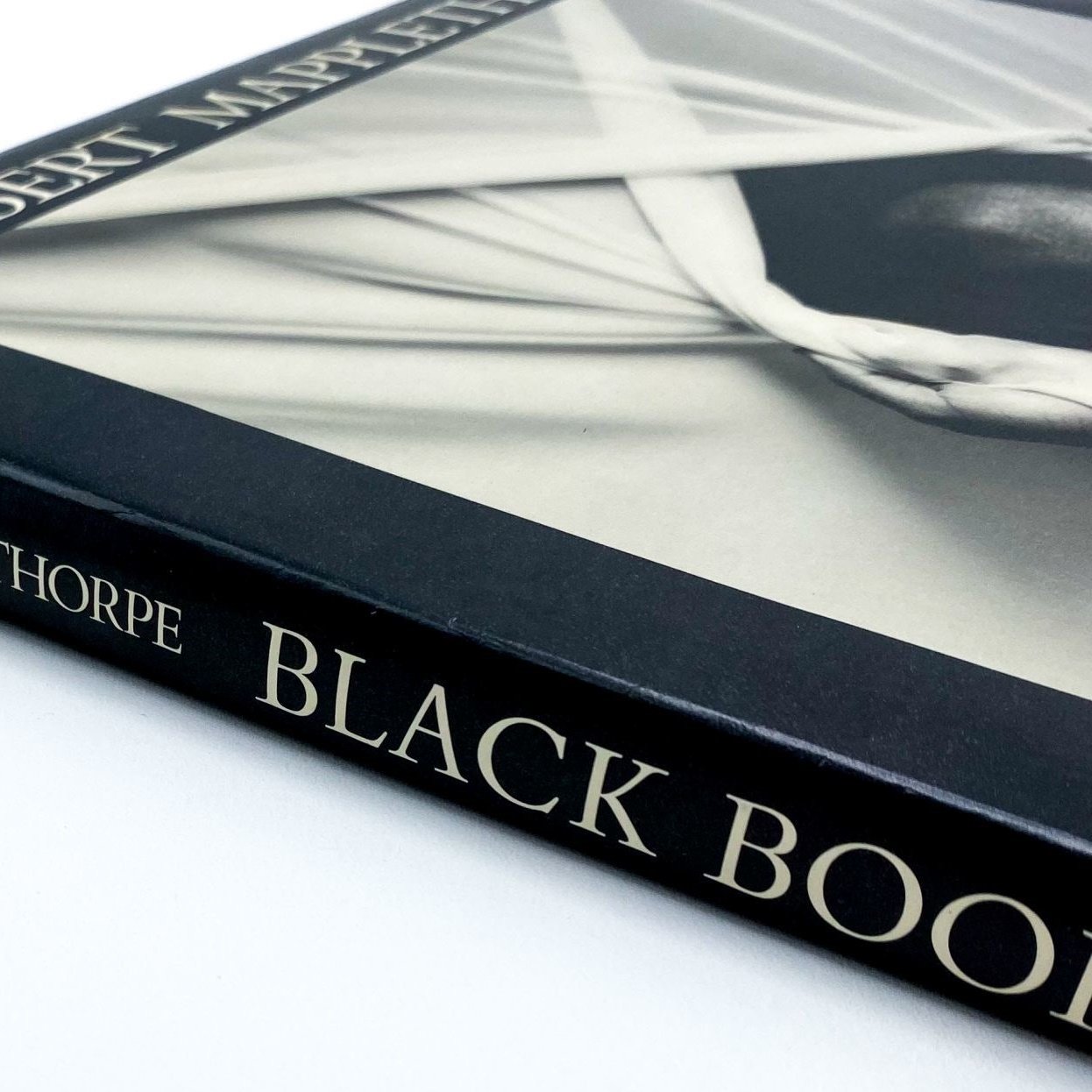
- Binding: Hardcover with cloth (canvas) cover.
- Tactile semiotics: Paper absorbs light rather than reflecting it. When touched, the paper has a roughness that resembles the pores of skin or the texture of stone. This creates a “warm” somatic connection , the opposite of the cold sheen of latex.
II. Visual and psychological language (Armor)
- Light logic: Strict, sculptural studio light ( Chiaroscuro ). The background is completely black, destroying any domestic context.
- Power Dynamics: Sculptural Objectification . The body here is not an “acting” subject; it is an architectural object. BDSM elements (leather, chains) are presented as sacred artifacts.
- Viewing Angle: Eye level or slightly below. The large scale of the book forces the viewer to physically “bend” over the page, creating a ritualistic submission to the image.
- Censorship signs: None. This is a manifesto for “visual freedom” that appeared just before the great legal attacks of 1989.
III. Sociocultural analysis (Marginal weight)
- Marginal Status: This publication represents the “canonization” of the fetish subculture . Mapplethorpe brought the leather and BDSM aesthetic out of the underground “basements” and into the halls of high art.
- Psychological armor: The skin here acts as a “second skin” armor , protecting a marginalized identity (especially in the LGBTQ+ context) and transforming it into an invulnerable, monumental sculpture.
- Impact note: This is the first publication to demonstrate that fetish aesthetics can be broadcast through the prism of classical beauty , thus forcing institutions (museums, archives) to recognize marginalized erotica as cultural heritage.
IV. Santrauka (LT)
- Didelio formato leidinys pasižymi aukštos kokybės matiniu popieriumi ir sodria duotono spauda, kuri sugeria šviesą ir sustiprina fizinį, beveik taktilinį žiūrėjimo patyrimą. Griežtas studijinis apšvietimas ir visiškai neutralus fonas paverčia žmogaus kūną skulptūriniu objektu, atskirtu nuo socialinio ar buitinio konteksto.
- Leidinyje naudojama estetika transformuoja BDSM ir latekso subkultūros vizualinius elementus iš pogrindinės aplinkos į klasikinės meno fotografijos lauką. Kūnas čia suvokiamas kaip monumentalus, apsaugantis identitetą ir kartu veikiantis kaip vizualinės galios simbolis.
- Ši publikacija turėjo stiprios įtakos fetišo estetikos perėjimams iš subkultūrinės erdvės į muziejų, archyvų ir meno istorijos diskursą, taip praplečiant vizualinės kultūros ir kultūrinio paveldo sampratą.
Last edited: 2026-02-28