

The Body / William A. Ewing, 1994
Canonical art + fetish crossover
Description
The Body
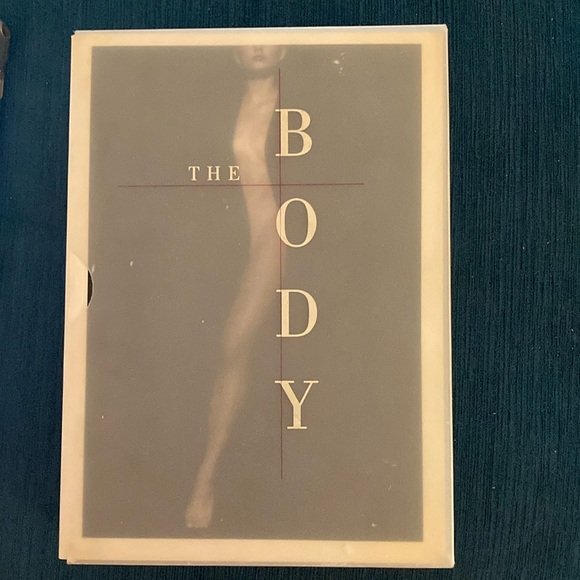
The Body is a large-scale photography book edited and written by curator William A. Ewing, presenting more than 360–365 images of the human form drawn from around 150 years of photographic history. First published in 1994, it has been described as one of the most distinctive and impactful photographic books on the body.
Although not solely a Robert Mapplethorpe monograph, it prominently features his work alongside many other major photographers, and helped frame Mapplethorpe’s nudes within a broader visual and cultural history of the body.
Key facts
-
Editor/author: William A. Ewing
-
Full title: The Body: Photographs of the Human Form (variants: Photoworks / Pictures of the Human Form)
-
First publication: 1994 (Chronicle Books / Thames & Hudson)
-
Extent: ~360–365 images, ~432–448 pages
-
Notable artists included: Nadar, Edward Weston, Man Ray, Robert Mapplethorpe, Cindy Sherman, Sally Mann, Barbara Kruger and others
Scope and structure
Ewing organizes the book into thematic chapters—such as scientific “probes” or bodily “metamorphosis”—each introduced by a short essay that links historical context to the images that follow. The photographs span medical and anatomical imagery, dance and sport, fashion, erotic and pornographic traditions, and surreal or dreamlike explorations of the body.
Mapplethorpe’s role in the book
Mapplethorpe is one of the contemporary photographers most prominently featured. Ewing situates his nudes—often seeking “perfection in form”—within a lineage of photographers fascinated by sculptural, idealized bodies. The book also alludes to the controversy around the 1988 Mapplethorpe exhibition and ensuing obscenity trial, using it as an example of how images of the body can ignite cultural and political conflict.
Today, in the age of the supermodel and the super-athlete, consciousness of both the private and the public body has achieved a new immediacy. That the 1988 Mapplethorpe exhibition became an international cause célèbre and, ultimately, the focus of an obscenity trial is just one example of how deeply photographs of the body continue to stir passion, cause controversy and compel interest at all levels of society. The Body is a true reflection of this fascination – and an exciting and provocative record of the camera’s infatuation with the human figure.
Visual style and cover
The book is dominated by black-and-white images, often emphasizing strong tonal contrast and sculptural lighting. One of the best-known covers features Sense, a striking photograph by Slovak photographer Tono Stano that uses a contorted female nude and high-contrast lighting to create an almost calligraphic abstraction of the body.
Critical reception and significance
Reviewers praised The Body as “startling, provocative and voyeuristic” and “one of the most unique and powerful photographic books in recent memory.” It is widely regarded as a key anthology for understanding how photography has shaped modern ideas about the nude, sexuality, beauty, and bodily politics—from 19th-century erotica to late-20th-century debates over censorship and representation.


Reviews
There are no reviews yet.