
Sentimental Journey / Nobuyoshi Araki, 1971
(in Progress)
Intimate erotic autobiography that influenced generations.
Description
Nobuyoshi Araki: Sentimental Journey
Nobuyoshi Araki: Sentimental Journey is a 1971 photography book by Japanese photographer Nobuyoshi Araki. It documents Araki’s honeymoon with his wife, Yōko Aoki, presenting an intimate visual diary that helped define his deeply personal and confessional photographic style. The book is considered a seminal work in postwar Japanese photography for its raw emotional honesty and innovation in autobiographical storytelling.
Key facts
-
Photographer: Nobuyoshi Araki
-
Publication year: 1971
-
Subject: Araki and his wife Yōko’s honeymoon
-
Genre: Autobiographical photography
-
Publisher: Self-published (limited edition of 1,000 copies)
Background and Creation
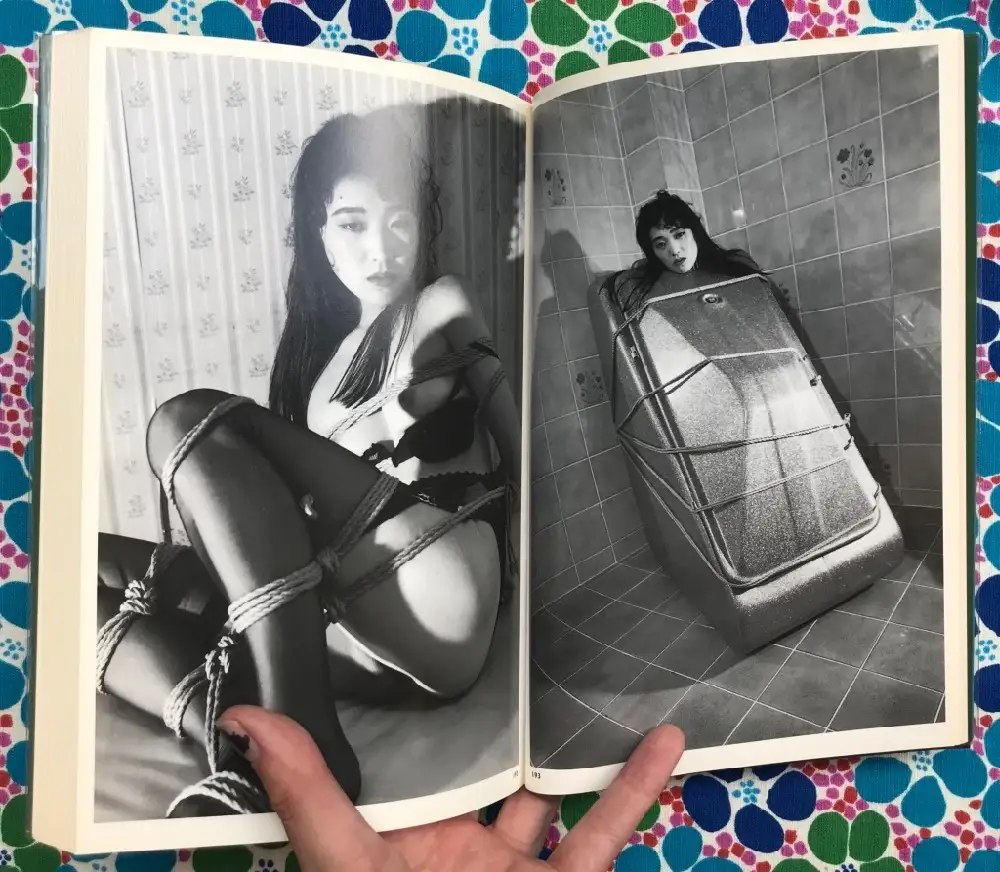
Araki produced Sentimental Journey immediately following his marriage, photographing Yōko and their travels through Japan. The series combines domestic intimacy with documentary immediacy, transforming private life into an artistic narrative. Its spontaneous, grainy black-and-white images marked a departure from conventional studio portraiture, blending affection, sexuality, and mortality.
Themes and Style
The book’s narrative captures the joy of newlywed life, but also prefigures loss and impermanence—motifs that recur throughout Araki’s later work. His candid approach situates photography as emotional documentation rather than detached observation. The juxtaposition of tenderness and eroticism reflects Araki’s lifelong exploration of love, memory, and death.
Legacy and Influence
Sentimental Journey became foundational to Araki’s oeuvre and inspired later volumes, including Sentimental Journey/Winter Journey (1991), chronicling Yōko’s illness and death. The work influenced generations of Japanese and international photographers, reinforcing the photobook as a medium for personal narrative. Original copies are now prized collector’s items, and the series continues to feature in major retrospectives of contemporary Japanese art.
(1971) is a seminal photography book by Nobuyoshi Araki that documents his honeymoon with his wife, Yoko Araki, across five days in Yanagawa, Japan. It is widely considered one of the most influential photobooks of the 20th century, pioneering a deeply personal, diaristic style often referred to as “I-photography“.
- I-Photography: Araki modeled his approach after the Japanese “I-novel” (watakushi shōsetsu), a literary form focused on the author’s private life. By rejecting the “falseness” of commercial and fashion photography, he favored raw, honest snapshots that captured both mundane and intimate moments.
- Breaking Taboos: At the time of its release, the book’s exposure of such private intimacy was controversial in Japan, which still adhered to strict social codes of behavior.
- Themes of Eros and Thanatos: The work explores the coexistence of ecstasy and despair, life (Eros) and death (Thanatos). This thematic link continued throughout his career, most notably in Winter Journey, which documented Yoko’s death in 1990.
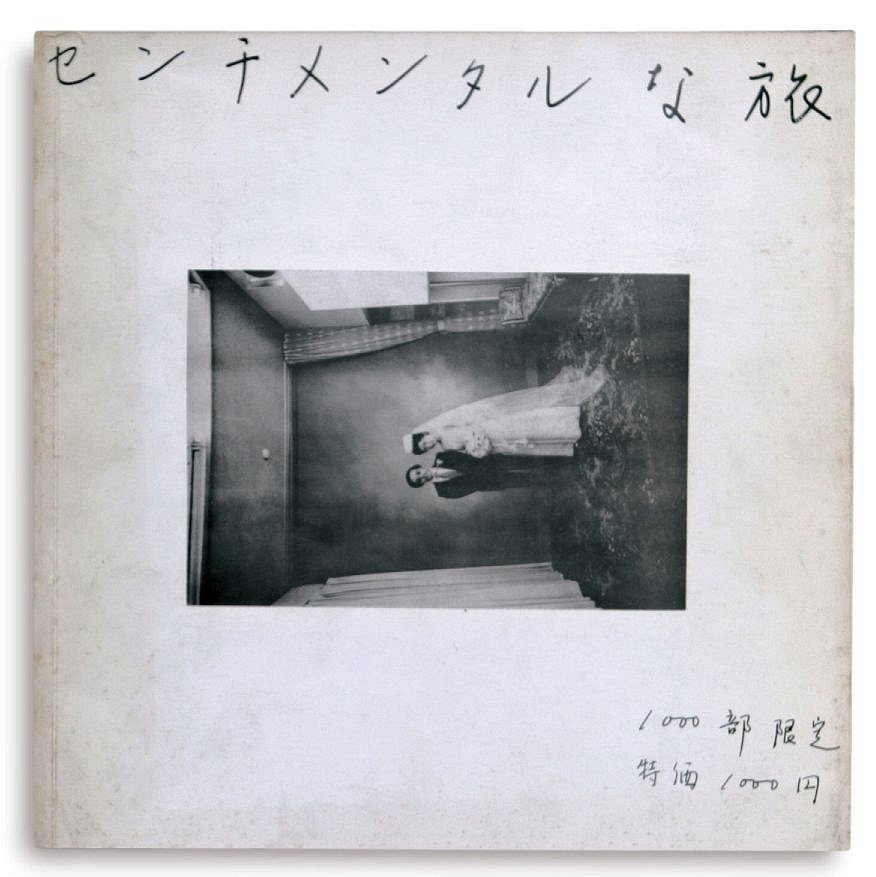
- Original Edition (1971): Self-published by Araki in a limited run of 1,000 copies. This edition was a stapled softcover (24 x 24 cm) featuring black and white photographs printed on photocopying paper.
- Expanded Edition (2017): Titled Sentimental Journey 1971–2017, this 288-page hardcover was published by HeHe to accompany a major retrospective at the Tokyo Photographic Art Museum.
- Key Contents: While the original focused purely on the honeymoon, later retrospectives include photos of Yoko until her passing, their cat Chiro, and Araki’s life after her death.
- Cultural Legacy: The work paved the way for subsequent generations of Japanese photographers to use their private lives as legitimate artistic subjects.
- Institutional Recognition: Pieces from the series are held in major global collections, including the Museum of Modern Art (MoMA) and the San Francisco Museum of Modern Art (SFMOMA).
- Influence: Renowned figures like the musician Björk have cited Araki’s work as a major influence, with Björk even commissioning him for her own album artwork.
is academically significant as the primary catalyst for the “I-photography” (shishōsetsu) movement in Japan, which shifted the medium from objective social documentation to radical subjectivity.
- The “I-Novel” Connection: Scholars frequently analyze the book through the lens of the shishōsetsu (I-novel), a Japanese literary tradition of self-confessional storytelling. Araki famously declared in the book’s preface that his photography was not about “truth” in the objective sense, but about his own personal “I-diary”.
- Rejection of Professionalism: Academic critiques highlight how the 1971 edition intentionally used “poor” production—side-stapled, photocopied pages—to reject the polished commercial and fashion standards of the time.
- Narrative of Mortality: The work is often studied alongside its sequels (Winter Journey, Spring Journey) as a complete lifecycle narrative that explores the transformation of the female subject from muse to memory following Yoko’s death in 1990.
- SFMOMA Research Materials: The SFMOMA Sentimental Journey Digital Publication provides an extensive overview of postwar Japanese photography and Araki’s role within it.
- Standard History Texts: The book is a primary case study in seminal histories such as:
-
The Photobook: A History, Vol. I
by Martin Parr and Gerry Badger.
-
The Book of 101 Books: Seminal Photographic Books of the Twentieth Century
edited by Andrew Roth.
-
- Tokyo Photographic Art Museum: The 2017 Retrospective Catalog serves as the most comprehensive modern scholarly record, covering the arc of his work with Yoko from 1971 to 2017.
- Theses and Abstracts: Academic works like “
Araki Nobuyoshi’s Contemporary Shishōsetsu
“ from the University of Oregon explore the success of the work as a “true-to-life autobiography”.
-
1971 Original
: 108 pages, b&w, privately published (1,000 copies).
-
2017 Expanded (HeHe)
: 288 pages, 402 images, ISBN 978-4-908062-18-6
In
(1971),
deliberately used a raw, unpolished physical design to mirror his rejection of the “falseness” in professional photography, a move that directly challenged Japan’s strict 1970s social codes of privacy and decorum.s +4
- Materials and Binding: The 1971 original was side-stapled (wire-stitched) with a simple photo-illustrated card cover. It used photocopying paper for the 108 black-and-white images, which gave the photographs a gritty, high-contrast, and “unprofessional” aesthetic.
- The “Green Leaf” Introduction: Araki originally intended for the book to have no text. However, after its release, the bookstore Kinokuniya requested an explanation. Araki then printed a short manifesto on a loose leaf of green paper and laid it into the books. This text officially linked his work to the “I-novel” literary tradition.
- Errors in Reprints: Interestingly, some later reprints (like those by Kawade Shobo Shinsha) intentionally include a typographic error on the cover and spine to maintain the “imperfect” spirit of the original self-published work.
- Dimensions: The original 1971 edition is a square quarto, approximately 24 x 24 cm (9.25 x 9.25 inches)
- The Public vs. Private (Uchi-Soto): 1970s Japanese society was governed by a strict distinction between the “inside” (private family life) and “outside” (public face). By exhibiting photos of his wife sleeping, bathing, and engaged in sexual intimacy, Araki was seen as “unmasking” a sacred private space for public scrutiny.
- Rejection of “Professional” Objectivity: At the time, photography in Japan was expected to focus on social realism or technical mastery. Araki’s “I-photography” was a rebellion against this, suggesting that a photographer’s only true subject is their own immediate, subjective life.
- The Vulnerability of Yoko: Critics often highlight the photograph of Yoko curled up on a boat as a symbol of this vulnerability. In the context of a 1970s honeymoon—usually a performance of new status—Araki instead captured moments of exhaustion, solitude, and raw emotion that contradicted the “happy couple” narrative.
- Legacy of the “Confessional”: Academics argue that Araki successfully transposed the confessional style of early 1900s Japanese literature into a visual medium, forcing a conservative audience to confront the “unreliable” and deeply biased nature of memory and love.
Sources: List of.


![Justine & Juliette [DVD]](https://decadencebooks.com/wp-content/uploads/2025/10/dvd-justine-juliette-decadencebooks-300x300.jpg)

Reviews
There are no reviews yet.