
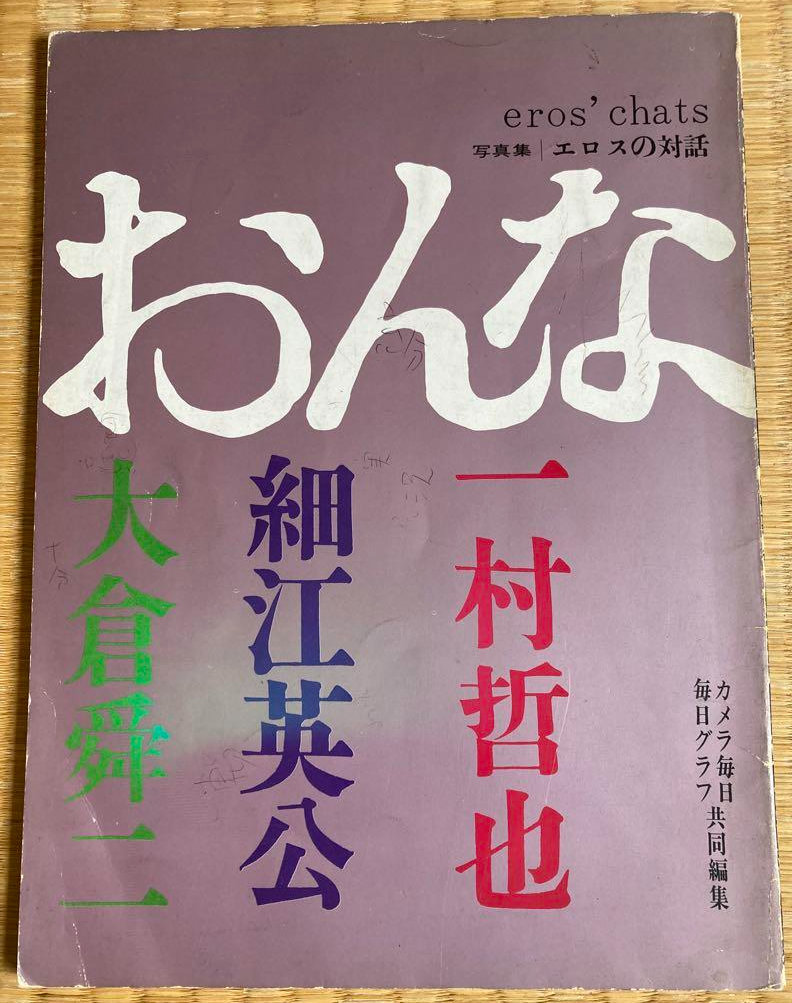
Onna Eros’ Chats 女エロス・変 / Eikoh Hosoe, 1969
Body as psychological theatre
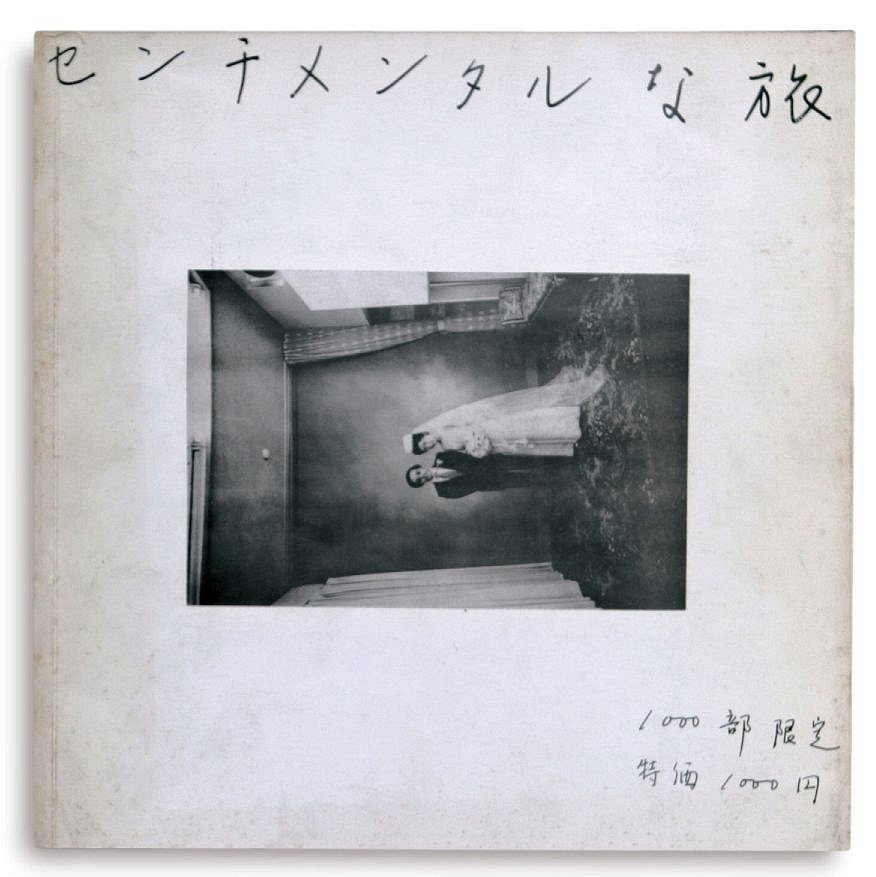
“Onna Eros’ Chats” (Onna Erosu-hen, or 女エロス・変) is a 1969 photography book featuring Eikoh Hosoe, published by Shashin Hyōronsha in Tokyo.
- Authors/Photographers: The book is a collaborative effort featuring work by Eikoh Hosoe, Tetsuya Ichimura, and Shunji Okura.
- Publisher: Shashin Hyōronsha (Tokyo).
- Context: It is a 1960s Japanese photobook that explores themes of the body and sexuality (Eros) during a period of rapid social change.
- Physical Description: It is often described as a softcover, sometimes listed with 112 pages or as a smaller magazine-style volume.
- Related Works: This period, 1969, was highly productive for Hosoe, coinciding with the creation of Kamaitachi (published shortly after) and his ongoing investigations into the human body and performative photography.
Description
Eros
Eros is a 1969 photography book by Japanese photographer Eikoh Hosoe featuring writer Yukio Mishima as its central model and collaborator. The book explores eroticism, death, and identity through highly stylized black-and-white images that helped define postwar Japanese photographic expressionism.
Key facts
-
Photographer: Eikoh Hosoe
-
Subject/model: Yukio Mishima
-
First published: 1969 (Shashin Hyōronsha, Japan)
-
Medium: Black-and-white fine-art photography
-
Themes: Eroticism, performance, mortality, myth
Collaboration and concept
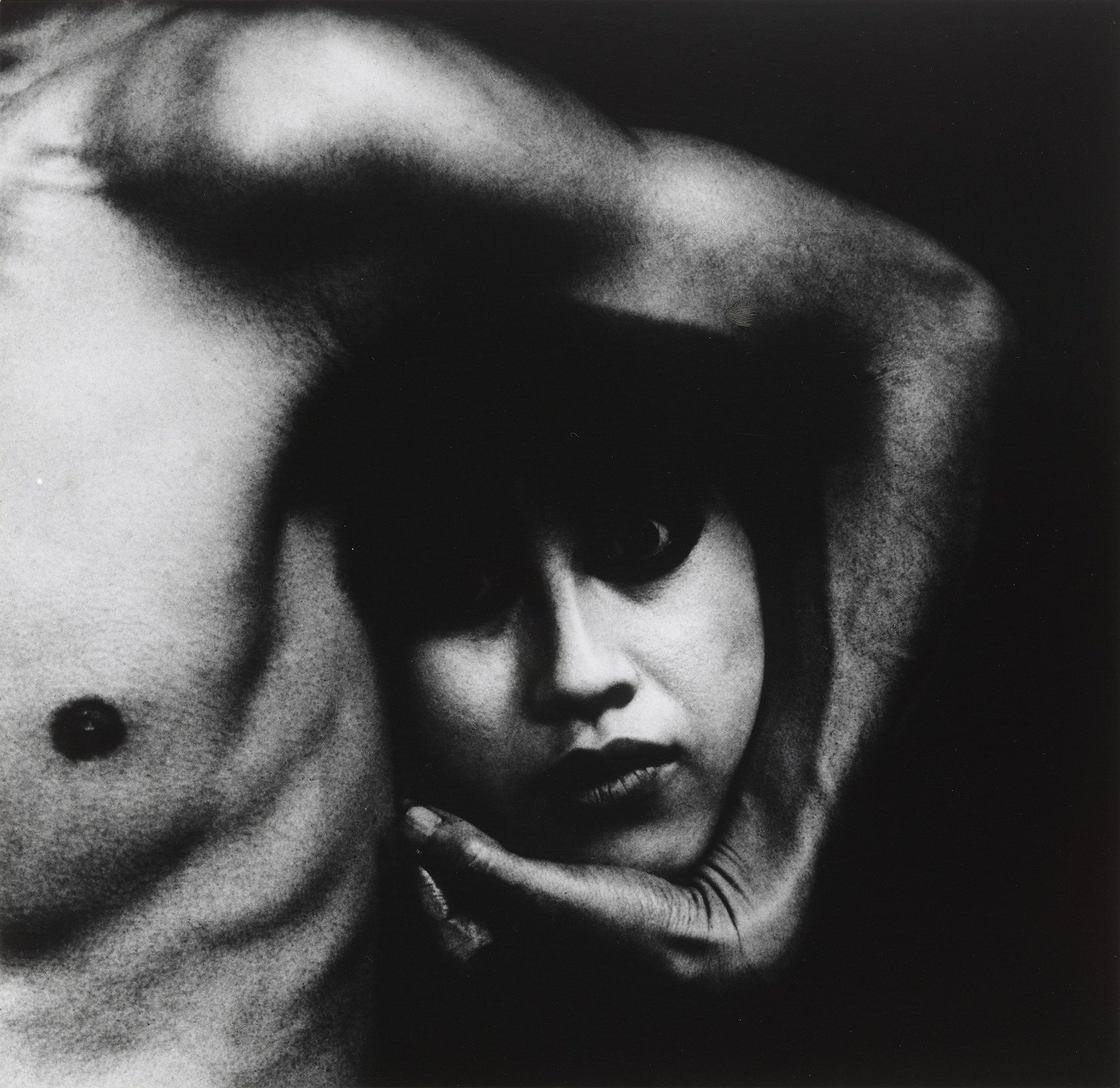
Hosoe conceived Eros as a visual dialogue with Mishima, who was fascinated by physicality and aestheticized violence. The sessions staged Mishima in theatrical poses—often nude or semi-nude—against stark backdrops, referencing classical and mythological imagery. This fusion of photographer and subject produced a symbolic meditation on desire and death reflective of both men’s obsessions.
Style and technique
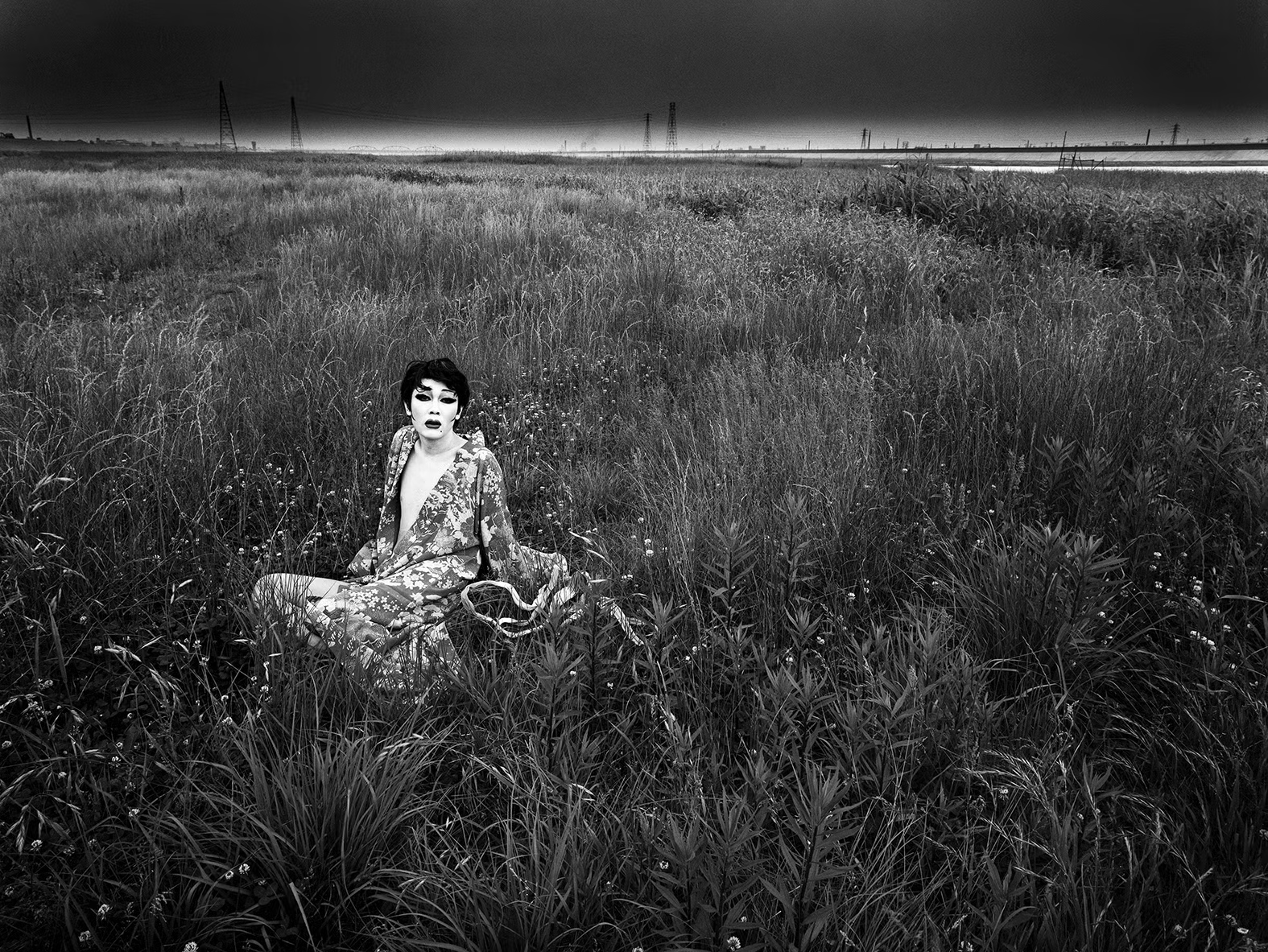
The series is noted for its high-contrast monochrome tones, surreal compositions, and performative intensity. Hosoe used chiaroscuro lighting and deliberate grain to evoke emotional tension. The work’s cinematic sequencing and avant-garde layouts aligned it with Japan’s experimental art scene of the 1960s, linking photography to performance and dance.
Publication and reception
When released, Eros provoked controversy for its explicit sensuality yet gained acclaim for artistic daring. Critics recognized it as a landmark of photographic modernism and a precursor to body-themed conceptual art in Japan. The book has since been reissued in several editions, each reflecting Hosoe’s evolving printing techniques and design refinements.
Legacy
Eros remains one of Hosoe’s signature works, alongside Ordeal by Roses. It is studied as an emblem of postwar Japanese identity crisis and the merging of literature, photography, and performance. The collaboration’s mythic tone and aesthetic rigor continue to influence contemporary photographers exploring the body and erotic symbolism.


Reviews
There are no reviews yet.