
Erotoscope / Raymond Abigeo, Jean-Claude Peretz, 1970
Erotoscope / Raymond Abigeo, Jean-Claude Peretz, 1970
Description
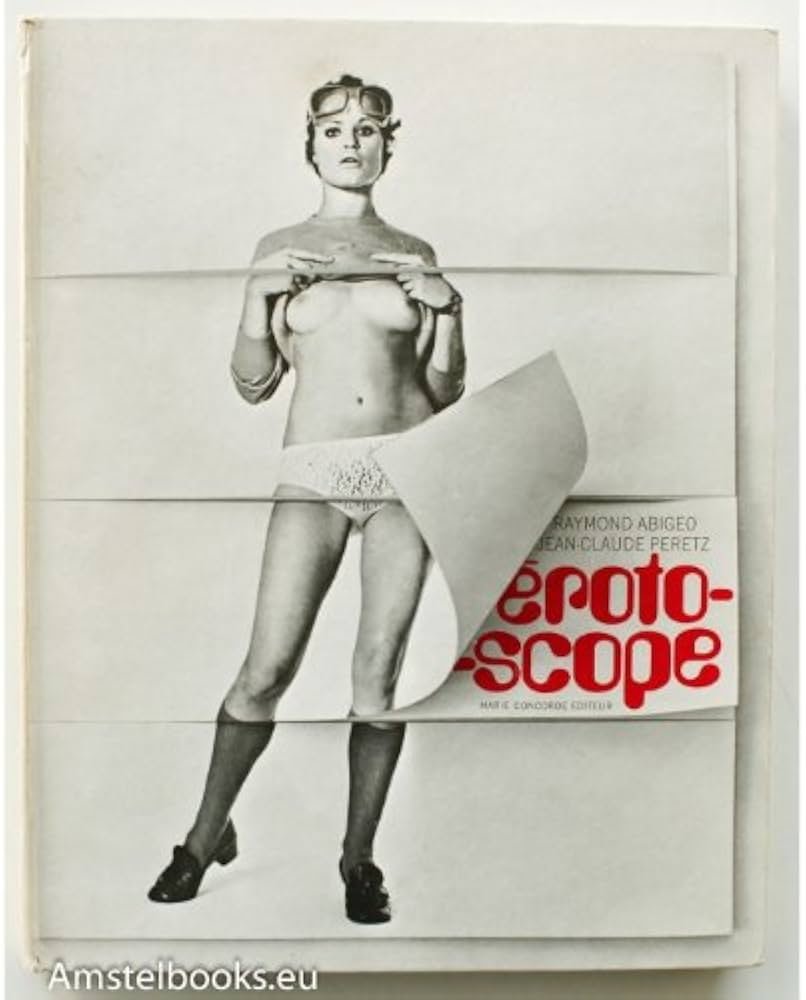
Erotoscope is a 1970 French erotic photography flip-book created by Raymond Abigeo and Jean-Claude Peretz and published by Marie Concorde in Paris. Designed as an interactive “system book,” it lets readers recombine segments of female figures, producing thousands of playful, fashion-inflected erotic variations.
Key facts
-
Photographers: Raymond Abigeo & Jean-Claude Peretz
-
Publisher / place: Marie Concorde, Paris
-
Year: 1970, first edition
-
Format: Spiral-bound flip-book, c. 28 × 22 cm
-
Concept: Mix-and-match figures; 26,568 possible outfit/undress combinations
Background and publication
The book was conceived at the end of the 1960s, when erotic imagery, fashion photography, and graphic design were rapidly cross-pollinating. Peretz, known primarily as an advertising photographer, collaborated with Abigeo to produce a luxurious yet playful edition that echoed the era’s loosening sexual mores after May ’68 in France.
Format and interactive design
Erotoscope is spiral-bound with photo-illustrated boards. Inside, black-and-white photographs of three models are printed on pages horizontally cut into three independent strips—typically head, torso, and legs. By flipping strips separately, viewers can “dress” or “undress” the models, creating tens of thousands of unique combinations of hairstyles, garments, and levels of nudity.
Themes and aesthetic
The imagery aims for chic, stylized eroticism rather than explicit pornography. Contemporary descriptions emphasize its light, humorous tone and fashion sensibility: an invitation to playful fantasy, with an emphasis on clothing, accessories, and attitude as much as the body itself. Text on the rear cover encourages readers to recombine the women “according to your tastes, your mood, your fantasies.”
Reception and collectability
Originally a niche experiment in interactive erotica, Erotoscope has since become a sought-after photobook. First editions are now traded by specialist dealers and appear in rare-book auctions, where they are noted for their inventive format and as emblematic of late-1960s/early-1970s European erotic and fashion photography.



Reviews
There are no reviews yet.